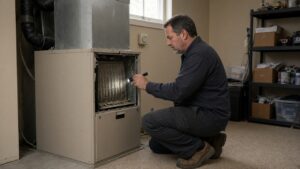
August in New Jersey asks a great deal from a central cooling system. Long afternoons, humid evenings, closed windows, and busy family schedules can keep equipment running for hours. The useful question is not whether the air conditioner makes noise or produces some cool air. The useful question is whether the entire home reaches a steady, comfortable condition without unusual cycling, weak airflow, rising humidity, or rooms that never seem to catch up.
A practical cooling check begins with observation. Pick a warm afternoon and walk through the home while the system is operating. Note the thermostat setting, the indoor temperature, and whether the temperature is still moving toward the target. Visit the rooms farthest from the equipment. Compare the air coming from several supply registers. This simple tour creates a clearer picture than changing settings repeatedly and hoping comfort improves.
Start at the thermostat because it directs the cooling cycle. Confirm that the display is clear, the time is correct, and the cooling schedule still matches the household routine. A thermostat near direct sunlight, a lamp, a television, or a warm kitchen can read conditions that do not represent the rest of the home. Homeowners considering better scheduling controls can review available thermostat options before choosing a replacement.
Next, listen to the length and rhythm of each cooling cycle. A healthy system usually runs long enough to move heat and moisture out of the living space, then rests after reaching the target. Very short cycles may point to control problems, restricted airflow, equipment sizing concerns, or another condition that deserves diagnosis. Extremely long cycles can reflect heavy weather, but they can also signal dirty components, duct losses, or declining performance.
Check the filter without guessing from the calendar alone. A filter can load faster during renovation, heavy pollen, pet shedding, or frequent door opening. Compare it with a clean replacement and follow the size and direction markings on the cabinet. Do not install a filter simply because it appears more restrictive or more impressive. The system must be able to move the correct amount of air through the selected filter.
Restricted airflow affects more than the feeling at a register. It can make the blower work harder, reduce cooling output, contribute to coil problems, and create longer operating times. The United States Department of Energy offers useful summer cooling guidance covering filters, routine maintenance, thermostat surroundings, and professional service. Use that guidance as education, not as a substitute for diagnosis.
Walk outside and look at the condenser while keeping hands and objects away from the fan and electrical cabinet. Grass clippings, leaves, seed pods, and dense shrubs can reduce the open space around the unit. The cabinet should have room to release heat. Do not spray chemicals into the coil, bend the fins, open electrical panels, or attempt refrigerant work. Those tasks require the right procedures, equipment, and training.
Observe water around the indoor equipment and nearby drain path. A small amount of normal drainage may be expected, but standing water, a wet cabinet, staining, or repeated drain backup deserves attention. Moisture problems can damage nearby finishes and may interrupt cooling if a safety switch activates. Record where the water appears and when it develops. That detail helps a technician separate a drain issue from condensation on another surface.
Humidity is another valuable performance clue. A home can reach the thermostat temperature and still feel sticky when the system does not remove enough moisture. Keep interior doors and supply registers in their normal positions during the test. Notice whether humidity is consistent or concentrated in a basement, addition, upper floor, or room with unusual sun exposure. The pattern matters because comfort problems do not always begin with the outdoor unit.
Uneven room temperatures often lead people to close registers, but that response can create new airflow problems. Make sure furniture, rugs, curtains, and storage do not block supply or return openings. Then note which rooms remain uncomfortable, the time of day, and whether doors are normally open or closed. Persistent differences may call for a closer look at insulation, solar exposure, equipment balance, and the condition of the home’s ductwork.
Duct concerns are easy to miss because much of the system may be hidden above ceilings, below floors, or inside walls. Accessible sections should look supported, connected, and free from obvious crushing or gaps. Do not enter unsafe attics or crawl spaces for an inspection. A professional can evaluate leakage, insulation, sizing, and airflow with better tools while considering how the duct layout interacts with the blower and equipment capacity.
Pay attention to odors, but describe them accurately. A brief dusty smell after a long idle period differs from a persistent musty odor, an electrical smell, or the smell of overheated material. Turn the system off and seek qualified help if there is smoke, sparking, a burning odor, or another immediate safety concern. Avoid covering a persistent odor with fragrance because the source still needs to be understood.
Sound changes also provide useful evidence. A new rattle may come from a loose panel or nearby object. Squealing, grinding, repeated clicking, or a sudden change in fan sound can point elsewhere. Record a short video from a safe location and note whether the sound begins at startup, continues through the cycle, or appears during shutdown. A repeatable description is far more useful than saying the system sounds strange.
Review recent energy use with context. Compare similar billing periods when possible and account for weather, occupancy, rate changes, electric vehicles, pool equipment, and other large loads. One high bill does not prove an air conditioner is failing. A pattern of longer operation, weaker comfort, and rising consumption is more meaningful. Bring the bills and your observations together when discussing performance with a service professional.
A homeowner should also know which work belongs to a qualified technician. Refrigerant diagnosis, electrical testing, capacitor replacement, coil service, combustion work, and equipment modifications are not casual household tasks. A correct evaluation connects temperatures, pressures, airflow, controls, and equipment condition. Replacing a part without understanding the whole system can waste money and leave the actual comfort problem unresolved.
Prepare for a service visit by writing down the equipment behavior before anyone arrives. Include the thermostat setting, indoor temperature, outdoor conditions, cycle length, affected rooms, sounds, odors, and any visible water. Note recent filter changes or construction work. Make access to the indoor and outdoor equipment clear. This preparation gives the technician better information and reduces time spent trying to reproduce an intermittent concern.
If the system is aging or repairs are becoming frequent, ask for a comparison that covers more than the purchase price. The discussion should address current condition, repair scope, expected reliability, comfort goals, energy use, duct limitations, electrical requirements, warranties, and installation quality. A larger unit is not automatically a better unit. Proper design must reflect the home, its heat gain, airflow needs, and the way the household uses each space.
Replacement planning should begin before a complete breakdown forces a rushed decision. Review possible timelines, equipment choices, permitting needs, and changes required around the existing system. New Jersey HVAC provides information about central air installation for homeowners who need to understand the process. An informed plan makes it easier to compare a focused repair with a responsible equipment upgrade.
For the rest of August, keep a short comfort log for several days. Record morning and afternoon temperatures, the rooms that feel different, and any unusual operation. Check the filter, keep the outdoor cabinet clear, and leave registers unobstructed. Do not keep lowering the thermostat when the home is not responding as expected. A lower setting does not correct restricted airflow, control errors, duct loss, or equipment faults.
Include household changes in that log. Guests, open doors, cooking, laundry, and extended use of heat producing electronics can temporarily increase the cooling load. Shade patterns also change through the afternoon. When the same problem appears under similar conditions on several days, the observation becomes more useful. A technician can compare that pattern with measured airflow, temperature change, controls, and equipment operation instead of relying on a single moment.
The goal of an August cooling check is not to turn every homeowner into a technician. It is to recognize useful patterns, handle safe basic observations, and know when professional evaluation is warranted. If cooling has become uneven, noisy, unreliable, or expensive, gather the evidence and request an HVAC estimate. A timely, well informed review can protect comfort now and support better decisions before the next demanding season.